The dog days of Summer are upon us and it’s hotter than Hell in New York. The triumphant Knicks colors that kicked off the season giving way to orange haze billowing in from up North and blue floodwater swelling around our feet.
It’s high time we lit out for the coast, packed our things and hit the highway for sunnier shores. Maybe we’ll pick up a few friends along the way, throw in with the great mélange of maniacs, drifters, murderers, perverts, and thieves that this wretched country has to offer.
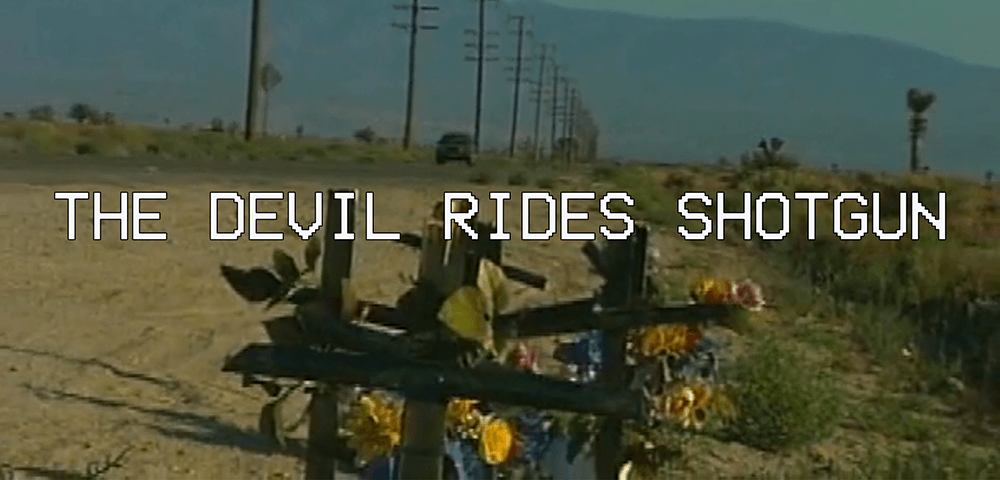
The American Interstate as an endless journey through Hell. A profusion of cherry lights, high beams, and overheads darting aimlessly across its black expanse. Lost souls driving straight on to oblivion, into the unknown terrors that lurk around every bend and behind every blind. All the while, the Devil sits pretty in the passenger seat.
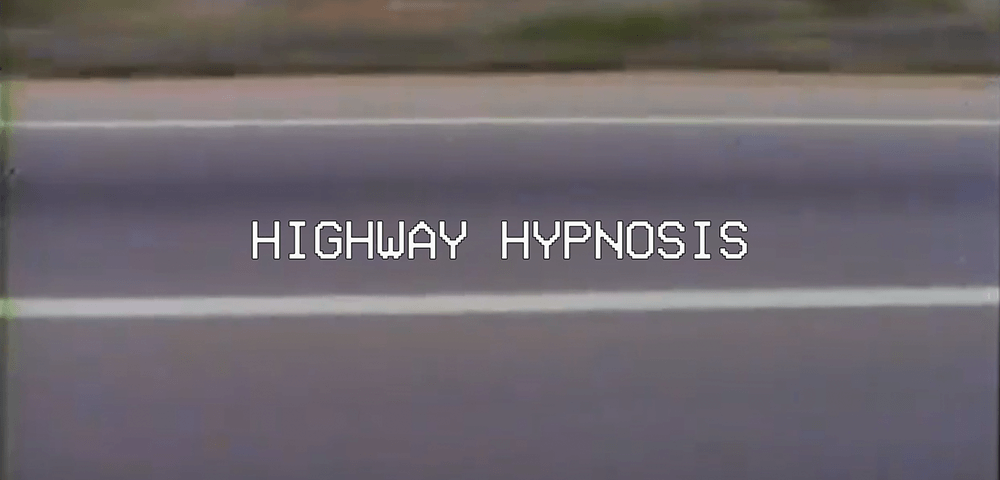
HIGHWAY HYPNOSIS
Dir. Ken Camp, 1984
United States. 63 min.
In English.
SATURDAY, AUGUST 1 – 10 PM
THURSDAY, AUGUST 6 – 7:30 PM
SUNDAY, AUGUST 9 – 5 PM
WEDNESDAY, AUGUST 26 – 10 PM
MONDAY, AUGUST 31 – 7:30 PM
GET TICKETS
One year after our EZTV series, we return to the hallowed video gallery with the first shot-on-video feature by Ken Camp (MANTRA), a monumental work of narrative video art and queer horror, following the Los Angeles Freeway Killer (Leonard Lumpkin) as he stalks the desert highways between L.A. and Las Vegas in search of his next victim.
Camp once remarked that if film is a screen between ourselves and the world around us, then video is a window: A thesis which HIGHWAY HYPNOSIS takes to its extreme. In lieu of a traditional narrative, the film is mainly structured around the Killer’s silent, trancelike drives. Camp’s camera takes in countless real-life motorists, pedestrians, and passersby, all with the unsettling undercurrent that any one of them could end up a victim. As the film progresses, these drives are punctuated by acts of sex and violence that push the viewer to the fringes of the Killer’s impenetrable psychology, into “the frightening zone where lay the genetic codes and memories that make us all killers.”
Special thanks to Muscle Distribution.
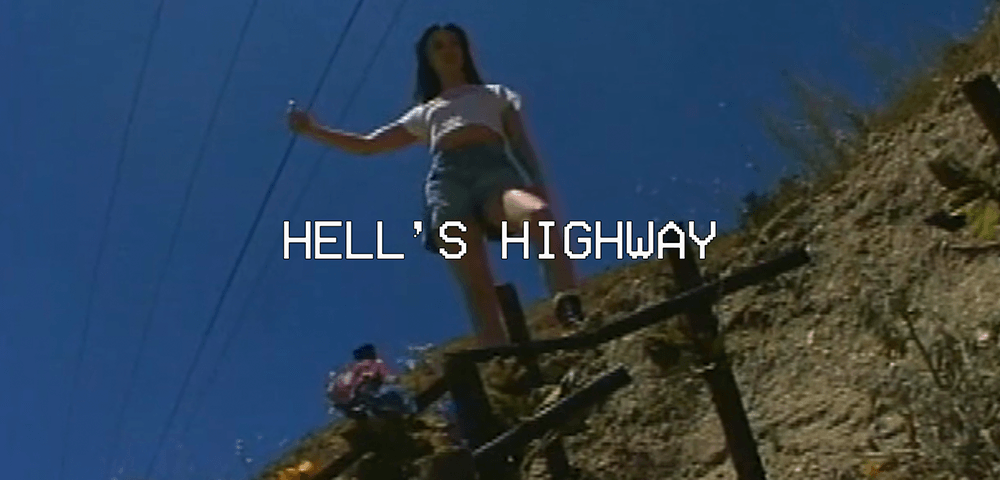
HELL’S HIGHWAY
Dir. Jeff Leroy, 2002
United States. 70 min.
In English.
WEDNESDAY, AUGUST 5 – 10 PM
THURSDAY, AUGUST 20 – 10 PM
SUNDAY, AUGUST 23 – 5 PM
SATURDAY, AUGUST 29 – MIDNIGHT
GET TICKETS
While on a road trip through Death Valley, four college friends pick up a hitchhiker named Lucinda (Phoebe Dollar) who soon reveals herself as a bloodthirsty maniac. The group finally manages to rid her from their car, only for her to reappear around every corner and down every bend like a murderous desert mirage.
In the early years of the post-BLAIR WITCH found footage boom, DIY legend and Spectacle fave Jeff Leroy (RAT SCRATCH FEVER) gifted us this SOV horror gem that’s part-DV travelogue and part-low budget splatterfest. The film goes 0 to 60 right out the gate and doesn’t slow down from there, with Leroy packing it to the brim with crafty gore, exploding miniatures, in-camera tricks, and one iconic sequence in which Ron Jeremy gets his dick cut off (though, alas, not in real life). But the real star of the show is Phoebe Dollar, who turns in a multi-faceted multi-character performance that punches well above its micro-budget weight class and ranks among one of the all time great horror turns.
Special thanks to Jeff Leroy.
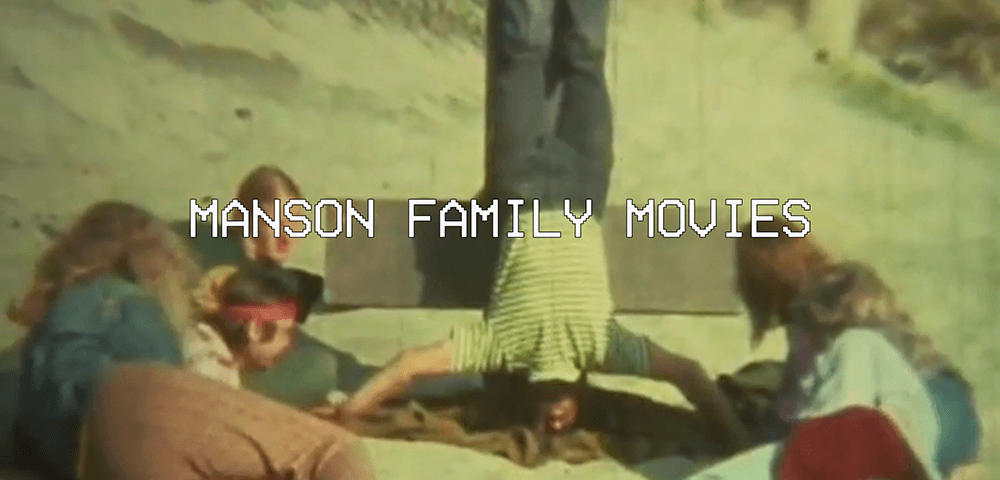
MANSON FAMILY MOVIES
Dir. John Aes-Nihil, 1984
United States. 87 min.
No spoken language.
FRIDAY, AUGUST 14 – MIDNIGHT
SATURDAY, AUGUST 22 – MIDNIGHT
GET TICKETS
Once upon a time in Hollywood, a former Beach Boys affiliate-turned-amateur Beatles historian directed a few of his most impressionable friends to commit a series of grizzly murders across Southern California, in what became one of the defining moments of 60s popular / counter culture and the nation’s ever-growing, ever-morbid fascination with “true crime”.
Between the years of 1974 to 1979, not long after Manson Family trials had concluded, enigmatic artist and connoisseur of fringe culture, John Aes-Nihil, embarked on a project to “re-stage” the events leading up to the infamous Tate-LaBianca murders as a series of faux home movies, based on the legend that the Family had at one point stolen camera equipment to document their actions. The resulting feature— which, coincidentally, premiered in 1984 at EZTV alongside HIGHWAY HYPNOSIS— truly lives up to its filmmaker’s namesake Aesthetic Nihilism: Shot entirely on Super8mm and completely silent save for an accompanying soundtrack mostly comprised of music made by the Family itself (plus a little Patty Duke for good measure). The film re-frames the Manson Family story as a first-person travelogue across Southern California, imbued with chillingly realistic detail as we bear (false) witness to one of the most notorious events of the American century.
Special thanks to Aes-Nihil and Aes-Nihil Productions.
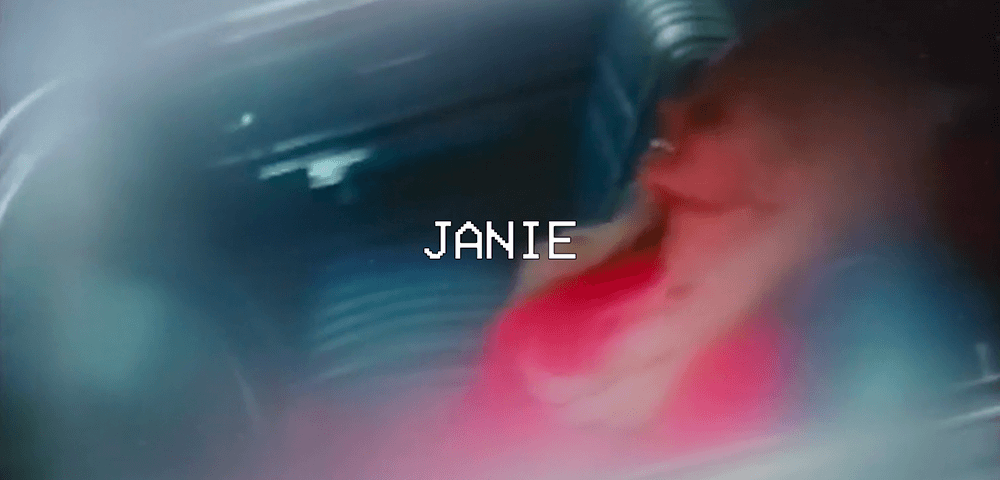
JANIE
Dir. Jack Bravman (and/or Roberta Findlay, depending on who you ask), 1970
United States. 65 min.
In English.
FRIDAY, AUGUST 7 – MIDNIGHT
SATURDAY, AUGUST 15 – MIDNIGHT
GET TICKETS
Janie (Linda Vair) is your typical teenage girl. She likes boys, hates school, and thinks most adults are stupid and disgusting. One afternoon, she and her best friend decide to skip school and hitchhike out of their small nondescript town. But when her friend and their driver pull over for a little afternoon delight, Janie’s own psychotic impulses take the wheel, revealing to her the orgiastic pleasure she derives from murder and mayhem. Janie then heads back to the road to thumb another ride, soon to be another bloody corpse left in her wake.
Rounding out our series of nightmare travelogues is this gratuitously sleazy and psychedelic softcore affair, shot, narrated, co-starring, and allegedly co-directed by sexploitation filmmaker extraordinaire, Roberta Findlay (Bravman is the sole directorial credit on the film, though he himself has admitted that Findlay did most of the actual directing; ironically a claim which Findlay denies). Come for the (ahem) titillating encounters between Janie and her would be lovers, but stay for the spontaneous violence, deep fried acid rock grooves, and Findlay’s unhinged voiceover narration as Janie’s own conscience, as deeply poetic as it is disturbing.
Special thanks to Alpha Blue Archive.